
English| EUR
Suggested for you
More currencies
Choose a language
Panama's lowland and montane forests support two distinct sloth species, both visible in accessible rainforest zones along the Panama Canal watershed. Gamboa Rainforest Reserve protects prime habitat where canopy trails and observation platforms bring both species within range. This guide covers which sloths live here, where their ranges overlap, and how to maximize your chances during a visit.
Quick answer
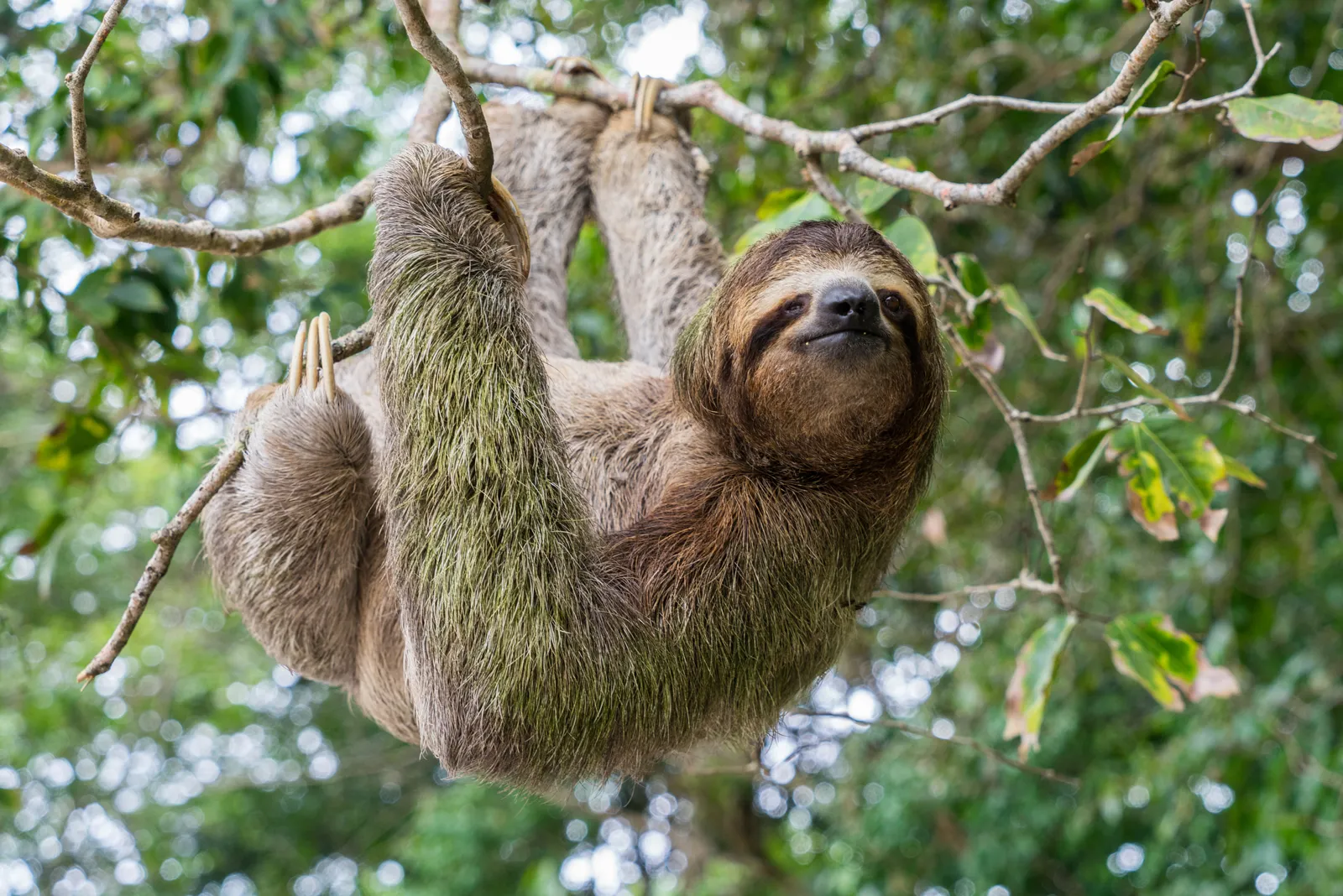
Yes, both Bradypus variegatus (brown-throated three-toed sloth) and Choloepus hoffmanni (Hoffmann's two-toed sloth) inhabit Panama's rainforests, including Gamboa. Three-toed sloths are diurnal and easier to spot in cecropia trees during morning hours, while two-toed sloths are nocturnal and rest high in the canopy by day. Gamboa's lowland forest at 50–150 meters elevation supports stable populations of both species year-round.
Panama ranks among the highest sloth-density countries in Central America, with both extant genera—Bradypus and Choloepus—coexisting across its Caribbean and Pacific slope forests. The distinction matters for observation strategy: three-toed sloths move and feed during daylight, descending weekly to defecate at the tree base, while two-toed sloths are strictly nocturnal, spending daylight hours motionless in emergent crowns. Are there sloths in panama's Gamboa region specifically? Field surveys confirm resident populations of both species within the 340-hectare reserve. Brown-throated three-toed sloths favor secondary-growth cecropia and Ficus stands near the Chagres River corridor, where their pale faces and deliberate climbing make them the more frequently sighted species. Hoffmann's two-toed sloths occupy older-growth zones with denser canopy, their cryptic pelage and inverted resting posture rendering them nearly invisible without thermal optics or a trained guide. Sloth ecology in lowland Panama revolves around the folivore niche—both species subsist on leaves with low caloric density, driving their famously slow metabolic rate. Three-toed sloths possess a specialized multi-chambered stomach that ferments Cecropia leaves over days; two-toed sloths demonstrate broader diet flexibility, adding fruits and occasional insects. Neither species migrates seasonally, and Gamboa's equatorial location eliminates the lean-season population crashes seen in drier Neotropical forests. Visitors asking where to find sloths in Panama's central corridor should prioritize early-morning canopy access when three-toed individuals are active and visible. The reserve's aerial tram and suspension bridges traverse mid-story and emergent layers between 15 and 25 meters—the exact height band where sloths feed and travel. Cecropia trees with fresh browse damage and algae-tinted fur caught on bark signal recent use. Two-toed sloth encounters remain opportunistic; guides scan resting sites from previous weeks, as individuals often return to the same high fork for consecutive days. February through April sees increased sloth activity during the dry-season mating window, though year-round observation remains viable due to stable food availability and lack of temperature extremes.
“Both three-toed and two-toed sloth species maintain year-round populations in Gamboa's lowland forest, with cecropia groves offering the highest observation probability during morning hours.”
Gamboa serves as a primary habitat for sloths, offering high-density observation opportunities for both major species found in Panama. These creatures thrive within the protected environment of the rainforest reserve.
Two-toed sloths are primarily nocturnal
Sloths possess specialized muscle structures
Low metabolic rates aid survival
Algae grows on sloth fur
Conservation initiatives protect local populations
The best arrival window is 10:00–11:00. Visiting during this time allows you to observe sloths when they are more active while avoiding the peak heat of the afternoon.
Sunny, 25-31°C. Consistent weather aids sightings.
Humid, 24-30°C. Frequent showers; sloths remain active.
—
Optimal wildlife activity levels and fewer visitors.
Verdict: The best slot for visiting is between 10:00 and 11:00 on any open day, regardless of the season.
The sanctuary operates six days a week, remaining closed on Mondays. Visitors may access the facility from Tuesday through Sunday.
The Gamboa Rainforest Reserve is located in Corregimiento de Cristobal, Colon, Panama. The most direct way to reach the reserve from Panama City is via private vehicle or taxi.
Avenida Omar Torrijos Herrera towards Gamboa
Direct service from Panama City to Gamboa Rainforest Reserve
Albrook Terminal to Gamboa (limited service)
Follow signs for Gamboa Rainforest Reserve upon entering the Gamboa area. Aim to arrive during the 10:00–11:00 window to ensure optimal conditions for your visit.
Maximize your chances of observing sloths in their natural habitat by employing specific field techniques used by local researchers.
Carry high-magnification binoculars to scan the upper canopy where sloths remain stationary for hours. Focusing on movement helps distinguish them from clumps of leaves or termite nests.
Professional guides possess trained eyes to spot sloths that camouflage effectively against tree bark and foliage. Their familiarity with the specific territories of resident individuals significantly increases success rates.
Sloths frequently feed and rest in Cecropia trees, which are abundant in this region. Identifying these specific trees allows you to direct your search more effectively than scanning random vegetation.
Sloths occupy the mid-to-high canopy levels rather than the forest floor. Shift your visual focus upward and look for curved shapes or dark bundles near forks in the branches.
Sloths are sensitive to noise and vibration, which may cause them to remain perfectly still or hide. Minimize talking and remain stationary for longer periods to allow the wildlife to resume normal activity.
Everything you need to know about are there sloths in panama
Yes, the Gamboa Rainforest Reserve is a primary location where you can find these animals in their natural habitat. Visitors often ask are there sloths in panama in this region, and the answer is that the lush canopy provides a perfect home for them.
We recommend an arrival window between 10:00 and 11:00. Visiting during these early hours helps you avoid afternoon heat while maximizing the chance to see wildlife activity levels.
The conservation fee is 25 USD per person for foreign adults. This fee supports the ongoing efforts to protect the species and their environment.
The reserve is located in the Corregimiento de Cristobal, Colon, and is accessible by car or arranged shuttle services. Many travelers researching are there sloths in panama find this location convenient due to its proximity to the Panama Canal.
The sanctuary is closed on Mondays. You can plan your visit between Tuesday and Sunday from 10:00 to 16:00.
The pathways are generally accessible, making it a great spot for families to explore. While looking to see if are there sloths in panama, children often enjoy the educational signage found throughout the tropical rainforest trails.
You can visit the official site at https://www.gamboaresort.com or call +507 340-9889 for the most current information. Checking these official channels ensures you have the latest updates on sightings and conservation programs.
Sloth Sanctuaries Near Panama City
Read more GuideWhere to See Sloths in Panama
Read more Tickets & toursGuided Sloth Sanctuary Tours
Read more Tickets & toursSloth Sanctuary Panama Tickets & Tours
Read more GuideSloth Sanctuary Panama Prices & Entry Fees
Read more GuideGamboa Sloth Sanctuary Visitor Guide
Read more